SQL Database Developer · Database & SQL
Library Management System
A normalized PostgreSQL schema with SQL reports for a multi-branch library.
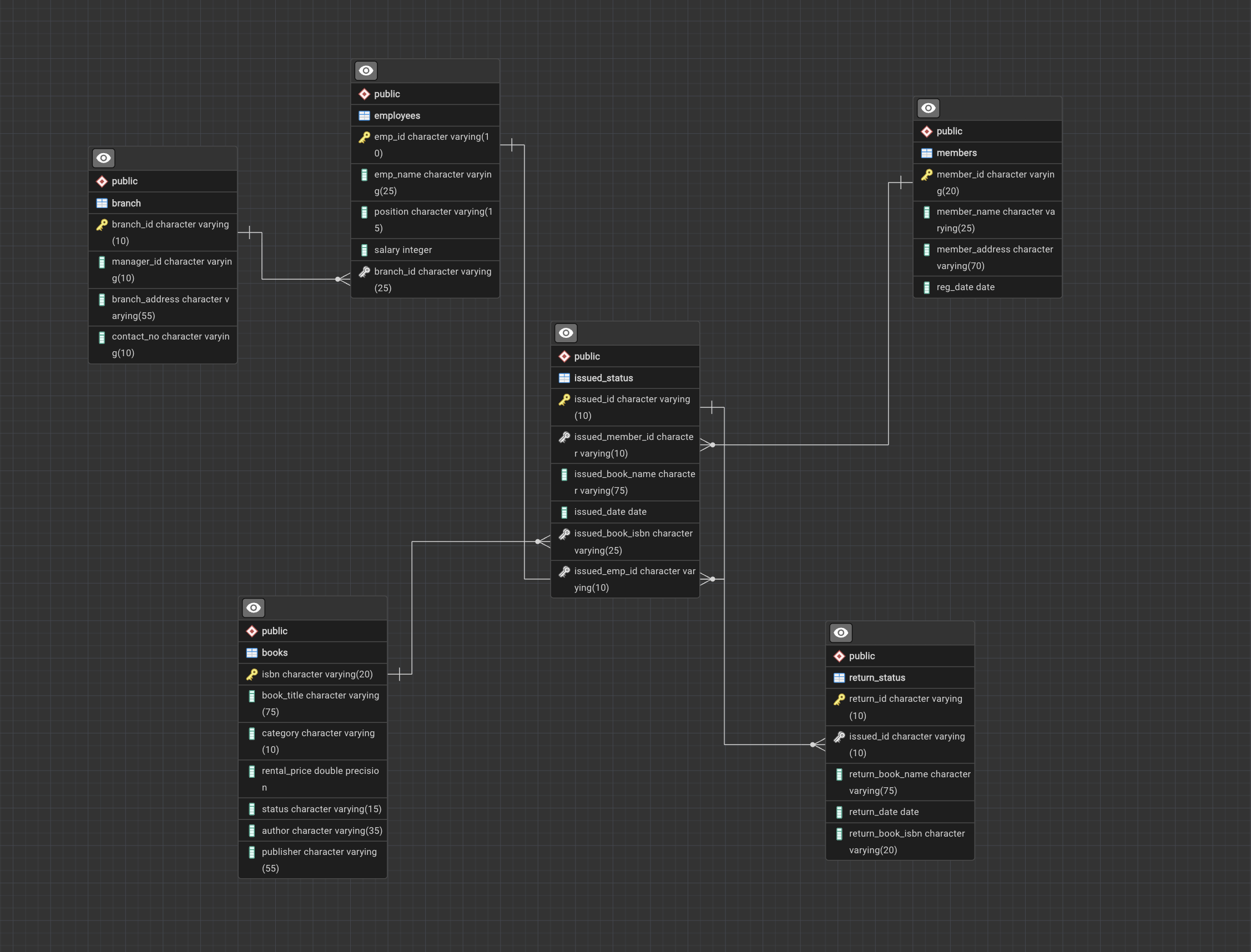
A PostgreSQL project for managing books, members, branches, and borrowing records. I designed a normalized database with six relational tables and developed SQL reports covering overdue books, rental income, borrowing activity, and branch performance.
In this case study 5 sections
Overview
The Library Management System is a PostgreSQL project for managing books, members, branches, and borrowing records. The focus of the work was relational design first, then SQL analysis on top of that design.
Relational design
I designed a normalized database with six relational tables: branch, employees, members, books, issued_status, and return_status. Branches employ staff, members borrow books, and issue and return records connect a member, a book, and the employee who processed the loan.
SQL reports
On top of the schema I developed SQL reports that answer the questions a library actually asks:
- Overdue books — which loans have passed their due date.
- Rental income — how much the library earns from borrowing.
- Borrowing activity — how members use the collection over time.
- Branch performance — how individual branches compare.
The overdue report treats a loan as overdue when it has not been returned and the issue date is more than 30 days ago:
SELECT
    ist.issued_member_id,
    m.member_name,
    bk.book_title,
    ist.issued_date,
    CURRENT_DATE - ist.issued_date AS over_dues_days
FROM issued_status AS ist
JOIN members AS m ON m.member_id = ist.issued_member_id
JOIN books AS bk ON bk.isbn = ist.issued_book_isbn
LEFT JOIN return_status AS rs ON rs.issued_id = ist.issued_id
WHERE rs.return_date IS NULL
  AND (CURRENT_DATE - ist.issued_date) > 30
ORDER BY 1;
Branch performance is a CREATE TABLE AS report: books issued, books returned, and rental revenue per branch, joined through the employee who issued the book. Query results from a live database are not included here.
My contribution
Database design and all SQL development on the project: table design and normalization, relationships between the six tables, and the reporting queries listed above.
Evidence
-
The six tables and how they connect. Branch employs staff, members and books meet in issued_status, and returns point back to an issue.